
Job Search
 Sathya Murthi
 Mar 25, 2026
 16 mins to read
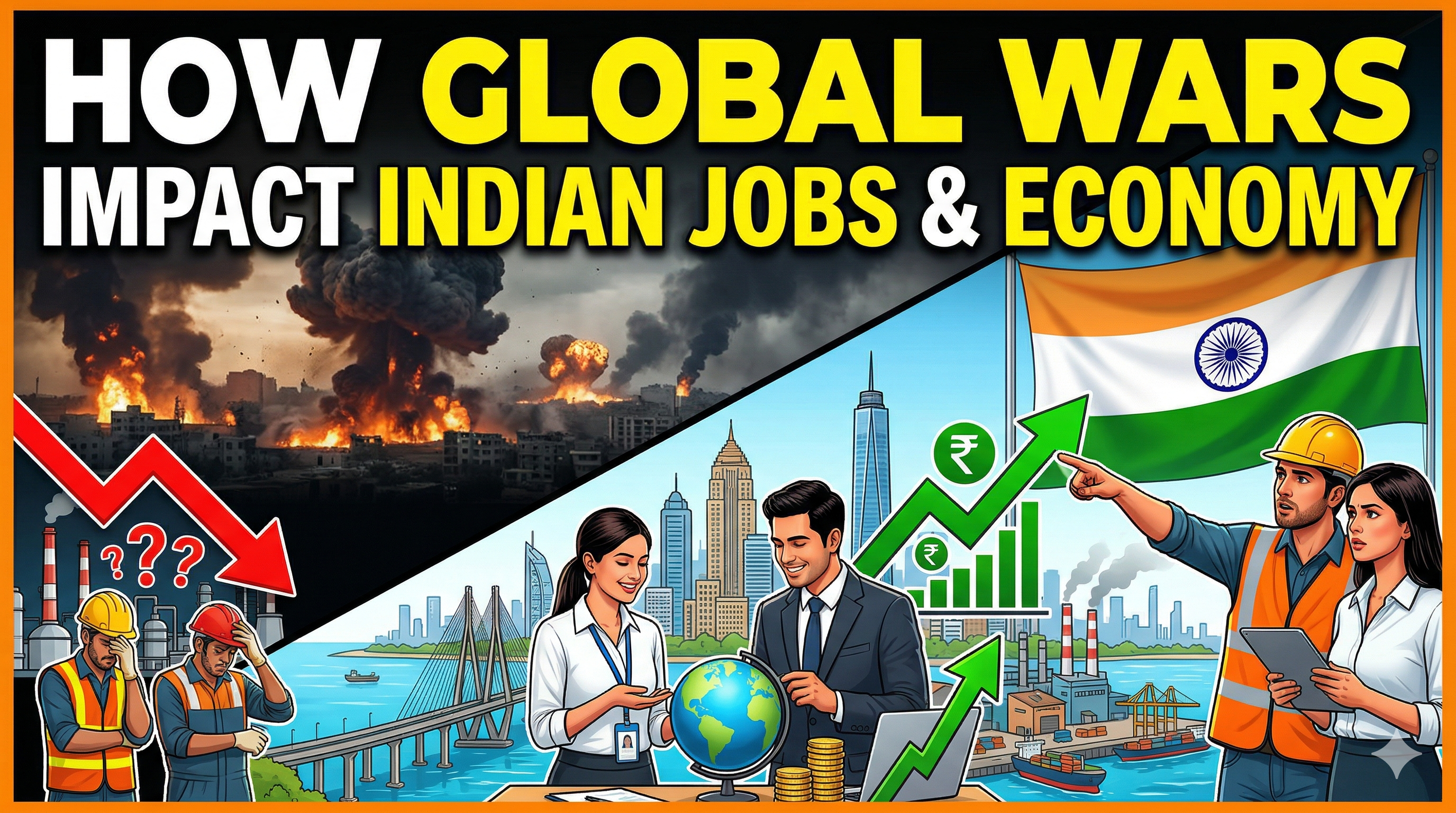
How Global Wars Are Impacting Indian Jobs and the Economy
Sathya Murthi
Mar 25, 2026
16 mins to read
Explore how geopolitical conflicts and global wars are reshaping the Indian job market, affecting employment opportunities, salaries, and the overall economic landscape for Indian workers both domestically and internationally.
Introduction
The global geopolitical landscape has always had significant implications for economies worldwide, and India is no exception. Recent years have witnessed increased tensions and conflicts in various regions, raising critical questions about how these developments impact the Indian job market and economy. This article explores the multifaceted effects of global wars on Indian employment opportunities, economic growth, and the future of Indian workers.
Impact on IT and Outsourcing Sector
India's IT industry, which employs over 5 million people directly and supports millions indirectly, is highly dependent on international clients, particularly from the US and Europe. Geopolitical tensions can disrupt business continuity and client confidence. Companies may postpone IT projects, leading to reduced hiring and potential layoffs in the sector. Moreover, trade restrictions and sanctions imposed during conflicts can create barriers to international collaboration and service delivery.
Effect on Remittances and NRI Investments
Over 32 million Non-Resident Indians (NRIs) work globally, sending billions in remittances back to India annually. These funds significantly impact Indian families and the domestic economy. During global conflicts, economic slowdowns in affected regions reduce employment opportunities and income for NRIs, directly affecting remittance flows. Additionally, uncertainty in international markets discourages NRIs from making long-term investments in India.
Commodity Price Volatility
Global conflicts often lead to supply chain disruptions and increased commodity prices, particularly oil and metals. India, being an energy-importing nation, faces increased inflation when crude oil prices spike. This affects manufacturing costs, reduces business profitability, and can lead to wage freezes or job cuts in various sectors including manufacturing, logistics, and retail.
Economic Growth and Employment Creation
Uncertainty in global markets directly impacts India's economic growth. When international investors face uncertainty due to geopolitical conflicts, they may redirect investments away from emerging markets like India. Slower economic growth translates to reduced job creation across all sectors. Companies may adopt a "wait and watch" approach, delaying expansion plans and new recruitment.
Specific Sectors Most Affected
1. Aerospace and Defense: Enhanced international security concerns may lead to import restrictions or diplomatic tensions affecting this sector.
2. Tourism and Hospitality: Travel restrictions and reduced tourist flows from affected regions impact employment in these industries.
3. Education: International student enrollments and cross-border educational collaborations may decline, affecting the education and EdTech sectors.
4. Export-Oriented Industries: Disrupted global trade affects export volumes and threatens employment in export-dependent sectors.
Opportunities in Challenging Times
While conflicts present challenges, they also create opportunities. India's stable political environment and demographic dividend make it an attractive alternative for companies seeking to diversify their operations away from conflict zones. Companies may accelerate their India operations, creating new job opportunities. Additionally, increased focus on supply chain resilience may lead to companies establishing manufacturing bases in India.
Recommendations for Job Seekers
1. Upskill and Adapt: Develop skills that are relevant in both domestic and international markets.
2. Diversify Career Options: Don't rely solely on international-dependent sectors; explore domestic opportunities.
3. Build Financial Reserves: Create emergency funds to weather economic uncertainties.
4. Stay Informed: Keep track of global developments and their potential impact on your industry.
5. Network Actively: Build connections within your industry to stay informed about opportunities.
Conclusion
Global wars and conflicts create a complex employment landscape for India. While they present challenges through reduced international opportunities, economic uncertainty, and sector-specific disruptions, they also create unique opportunities for diversification and growth. The key for Indian workers is to remain adaptable, skilled, and informed about global developments. By understanding these impacts and preparing accordingly, Indian professionals can navigate this uncertain landscape and secure their careers for the future.
The Indian economy's resilience and growth potential remain strong fundamentals. With proper preparation and strategic career planning, Indian workers can not only survive geopolitical uncertainties but thrive in the opportunities they create.

