
Interview Prep
AI & Jobs
 Sathya Murthi
 May 03, 2026
 6 mins to read
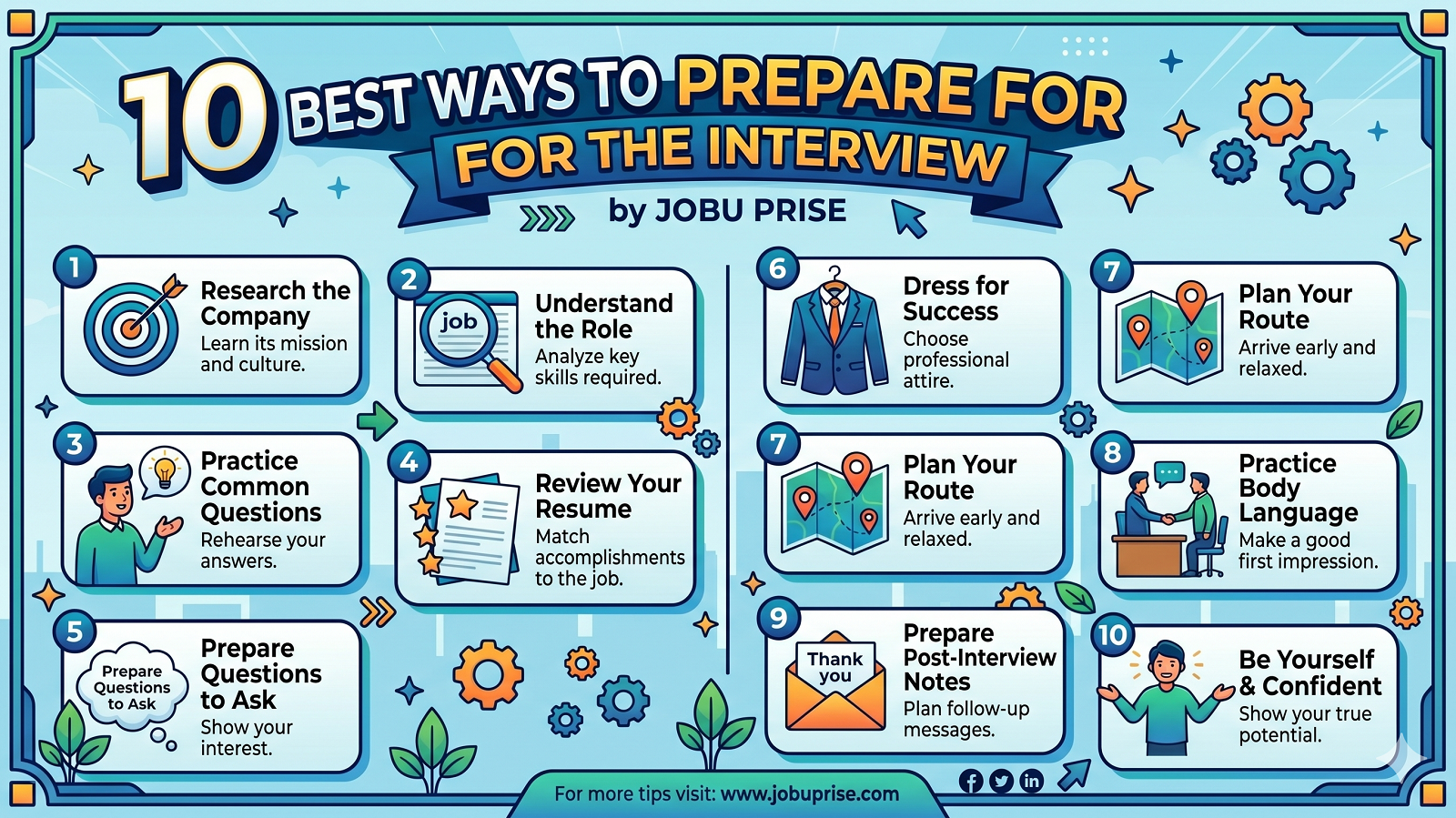
10 Best Ways to Prepare for the Interview by Jobuprise
Sathya Murthi
May 03, 2026
6 mins to read
Landing your dream job starts with nailing the interview. Discover the 10 best ways to prepare for a job interview and walk in with confidence, clarity, and a competitive edge by jobuprise
Introduction
A job interview can be one of the most nerve-wracking experiences in a professional's life. But here's the truth — interviews are not just about talent, they are about preparation. The candidates who walk in prepared are the ones who walk out with the offer. Whether you're a fresher or a seasoned professional, these 10 best ways to prepare for an interview will help you perform at your absolute best.
1. Research the Company Thoroughly
Before you step into any interview, know the company inside and out. Visit their website, read their mission and values, check recent news, and understand their products or services. Interviewers are always impressed when candidates demonstrate genuine knowledge about the organization.
Tip: Look up the company on LinkedIn, Glassdoor, and Google News to get a well-rounded view.
2. Understand the Job Description
Read the job description multiple times. Identify the key skills, responsibilities, and qualifications they are looking for. Then match your own experience to those requirements so you can speak directly to what the employer needs.
Tip: Highlight keywords in the job posting and make sure your answers reflect those skills.
3. Practice Common Interview Questions
There are certain questions that appear in almost every interview. Prepare strong, concise answers for questions like:
- "Tell me about yourself."
- "What are your strengths and weaknesses?"
- "Why do you want to work here?"
- "Where do you see yourself in 5 years?"
Practice out loud — not just in your head. The more you say your answers, the more natural and confident they will sound.
4. Use the STAR Method for Behavioural Questions
Behavioural interview questions like "Tell me about a time you handled conflict" require structured answers. Use the STAR method:
- Situation – Set the context.
- Task – Describe your responsibility.
- Action – Explain what you did.
- Result – Share the outcome.
This format keeps your answers focused and impactful.
5. Prepare Your Own Questions to Ask
Interviews are a two-way street. Prepare 3–5 thoughtful questions to ask the interviewer. This shows curiosity, engagement, and that you have done your homework.
Examples:
- "What does success look like in this role?"
- "How would you describe the team culture?"
- "What are the biggest challenges someone in this position might face?"
6. Dress Appropriately for the Role
First impressions matter. Research the company's dress code and aim to dress one level above it. When in doubt, go with business formal. Looking polished and professional signals that you take the opportunity seriously.
Tip: Lay out your outfit the night before to avoid last-minute stress.
7. Plan Your Logistics in Advance
Nothing derails confidence faster than arriving late. Plan your route, check for traffic or transport disruptions, and aim to arrive 10–15 minutes early. For virtual interviews, test your internet connection, camera, and microphone beforehand.
Tip: Do a trial run to the interview location the day before if it's somewhere new.
8. Review Your Resume and Portfolio
Know every bullet point on your resume. Be prepared to discuss any project, job, or achievement listed. If you have a portfolio — whether it's design work, code, writing samples, or case studies — review it and be ready to walk the interviewer through your best work.
Tip: Bring printed copies of your resume, even for in-person interviews at tech companies.
9. Work on Your Body Language and Confidence
Your non-verbal communication speaks volumes. Practice:
- Maintaining good eye contact.
- Sitting up straight with an open posture.
- Offering a firm, confident handshake.
- Smiling genuinely and nodding to show engagement.
Record yourself doing a mock interview to spot nervous habits like fidgeting or filler words like "um" and "uh."
10. Get a Good Night's Sleep and Stay Calm
All the preparation in the world won't help if you walk in exhausted and anxious. The night before your interview, avoid cramming and instead relax, eat well, and get at least 7–8 hours of sleep. On the day of the interview, give yourself extra time, take deep breaths, and remind yourself — you've prepared, you're ready.
Tip: A short morning walk or light exercise can help reduce anxiety and sharpen focus.
Conclusion
Interview success is not about luck — it is about preparation, practice, and mindset. By following these 10 best ways to prepare for an interview, you will walk into the room feeling confident, capable, and ready to impress. Remember, every interview is a learning experience that brings you one step closer to your dream job.
Ready to find your next opportunity? Explore thousands of job listings on Jobuprise and take the next step in your career today!
Share

